Same Day Options
Same day turnaround is available for suitable orders when artwork, garment stock and quantity are confirmed early enough.
Brick Lane, London
If you are comparing blank garments for merch, events or staff wear, knowing how to choose T shirt fabric for printing can save money and stop avoidable mistakes. The best choice depends on how the shirts will be worn, how long they need to last, what print result you want and how quickly you need them. This guide is written for London customers who are preparing artwork, garment options, quantities or deadlines before asking for a quote. It covers fabric weight, cotton and blends, softness, durability, common mistakes, and the practical details TeeLane needs if you want printing advice, Brick Lane collection or a suitable London courier.
support
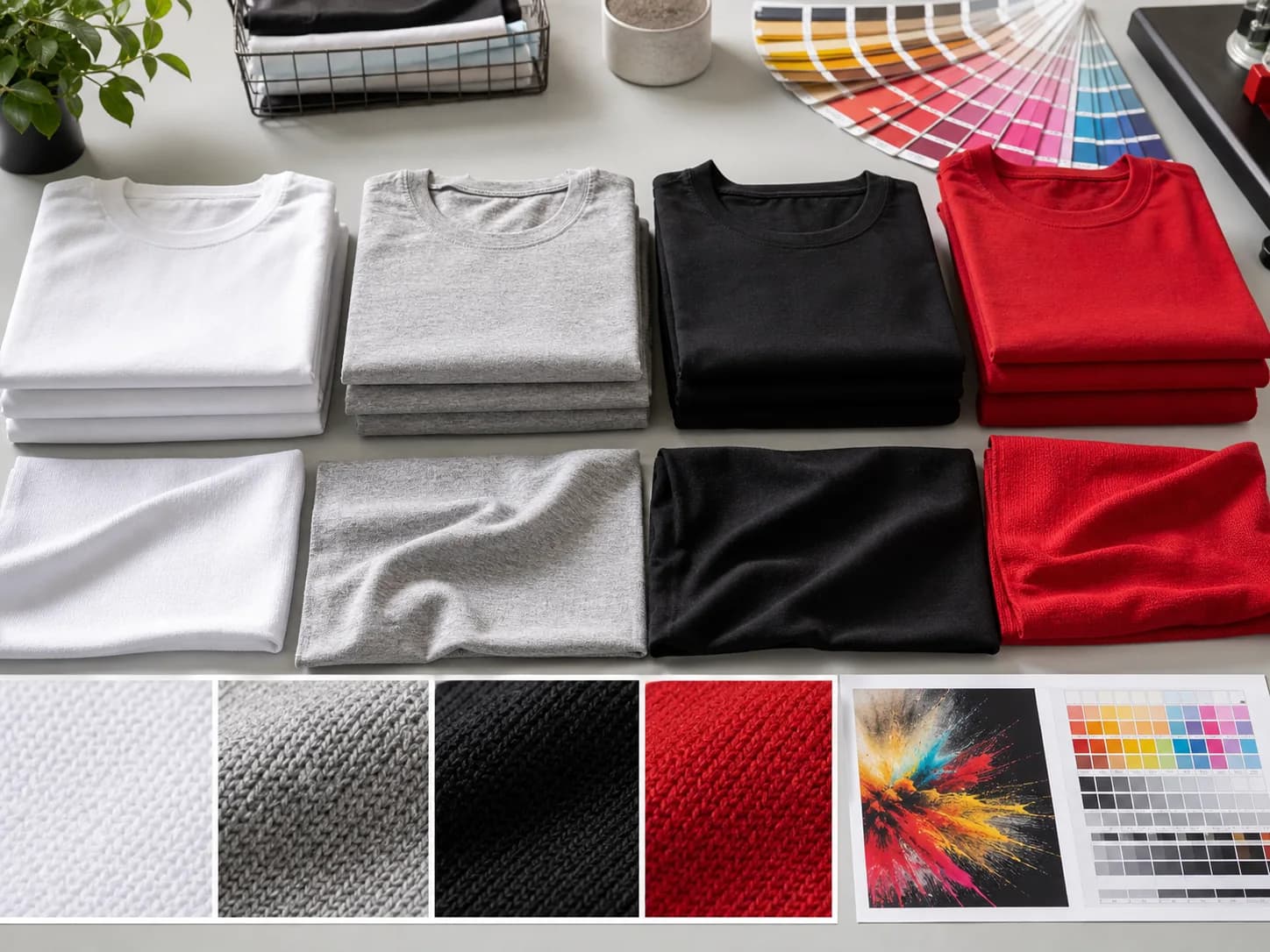
Choose T shirt fabric for printing by starting with the job, not the fabric label. Decide who will wear it, how often it will be washed, whether you need a soft retail feel or a sturdier promo/workwear feel, and whether the garment needs to suit cotton, blends or sportier fabrics. If you are unsure, send TeeLane the garment link or photos, your quantity, sizes, deadline and artwork so we can advise before you buy the wrong blanks.
A charity event tee, resale merch drop and staff uniform should not all be bought the same way. Choosing by use first usually gives better print results and better value.
Some fabrics feel great on the hanger but are too thin, too stretchy or too translucent for the job. Checking feel alongside print needs helps avoid disappointment.
Heavier or more structured garments can wear better, while softer options may suit fashion or short-run event use. The right balance depends on who will wear them and how often.
A quick fabric check before production can stop you ordering unsuitable garments, especially when deadlines are tight or you are supplying your own stock.
Fabric type, garment colour, quantity, artwork and delivery method all affect quoting and turnaround. Better prep means fewer back-and-forth messages.
Same-day production is only possible for suitable orders once stock, artwork, quantity and capacity are confirmed. Fabric decisions can help or slow that process.
The most useful custom T shirt printing advice is to ignore vague terms such as premium or best until you know the purpose of the garment. A shirt for a one-day promotion near Shoreditch, a team order for a food pop-up around Spitalfields, and branded merch you want people to keep wearing are different jobs with different priorities.
Useful next steps include t shirt printing London and Same Day T Shirt Printing London before sending your artwork to TeeLane.
Ask yourself what matters most: low overall spend, softness, structure, wash durability, or a smart consistent look across multiple sizes. If you start there, choosing fabric becomes far easier than comparing random product descriptions online.
For London customers working to an event date, this step also affects speed. If you leave fabric decisions until the last minute, you may end up choosing from whatever is in stock rather than what actually suits the job.
When people ask how to choose T shirt fabric for printing in the UK, fabric weight is often the missing piece. The label may show GSM, but that number only helps when you relate it to the job. Lighter shirts can feel cooler and cost less, but they may also feel less substantial. Heavier shirts can look more premium and wear better, but they are not automatically the right answer for every order.
Useful next steps include Artwork Guide for T Shirt Printing and TeeLane Printing Prices before sending your artwork to TeeLane.
Think about what the garment needs to feel like in the hand and on the body. A lighter tee may suit summer events or high-volume giveaways. A midweight option often works well when you want a balance of comfort, print stability and general wearability. Heavier shirts can be useful when you want a more structured fit or a sturdier merch feel.
Weight also affects how confident customers feel about the purchase. If you are selling printed T shirts, people often notice drape, softness and body before they notice the print itself. If you are ordering for a short event, they may care far less about long-term wear.
100% cotton is popular because it usually feels familiar, breathable and easy to wear. For many printed T shirt orders, cotton is a straightforward place to start, especially if softness and casual everyday wear matter. That said, not all cotton shirts feel the same. The knit, finish and weight can change the result significantly even when the fibre content sounds simple.
Useful next steps include DTF Printing London and Hoodie Printing London before sending your artwork to TeeLane.
Blended fabrics, such as cotton and polyester mixes, can be useful when you want easier care, reduced shrink concerns or a slightly different feel. For some staff and event orders, blends strike a sensible balance between comfort and practicality. They can also be a good option when you want a shirt that holds up well through repeated use without feeling overly heavy.
Performance-led synthetic garments are more common for sports, training and some promotional runs where quick drying matters. They can work well, but they should be chosen deliberately. The print look and handle may differ from what people expect on soft casual cotton, so it is worth deciding whether the garment is for athletic function or lifestyle wear.
Fabric choice is not just about comfort. It changes how the print looks and behaves. Smooth, stable garments usually make life easier for clean placement and a tidier finish. Very stretchy, very thin or heavily textured shirts can still be printable, but they may not give the same feel or visual result as a more stable blank.
This matters especially if your artwork includes fine details, small text or a bold chest graphic that needs to sit neatly. TeeLane offers DTF and related garment printing, which can suit a wide range of garments, but the finished result still depends on the base fabric. A soft fashion tee, a sturdy cotton shirt and a synthetic training top do not all present the print in the same way.
Also think about wash frequency. If the T shirts are for temporary use, you may prioritise speed and cost. If they are for regular wear, work or resale, choose a fabric you are happy to live with after repeated washing, not just one that photographs well on day one.
If you are unsure between two or three garments, do not guess. Send TeeLane the links, photos or product names and explain the job. A useful quote depends on more than the design alone. Fabric type, garment colour, quantity, size breakdown, print positions, sourcing, artwork readiness and deadline all affect cost and production planning.
Turnaround is also tied to fabric choice. Same-day production is only possible for suitable orders after stock, artwork, quantity and production capacity are confirmed. If the blank garment is hard to source, if the artwork needs fixing, or if the order is large or split across many sizes and colours, the process slows down. If the job is urgent, say so at the start so the conversation can focus on realistic options rather than ideal ones.
TeeLane is based at 18 Spelman Street, London E1 5LQ, near Brick Lane. Suitable orders can be collected locally, which often helps customers who need printed garments quickly. If collection is not practical, London courier or delivery options can be discussed depending on the order, timing and destination. For customers anywhere in London, the fastest route is usually to send clear garment options and complete quote details on WhatsApp before buying stock.
Same day turnaround is available for suitable orders when artwork, garment stock and quantity are confirmed early enough.
T shirts, hoodies, polos, tote bags, workwear and DTF prints are popular choices. TeeLane will recommend the most practical print route for your deadline.
Send quantity, garment type and artwork for an accurate quote, or start with the prices page.
TeeLane helps London customers choose the right garment, print method and turnaround for how to choose t shirt fabric for printing. Send your artwork, quantity, sizes and deadline on WhatsApp, or open the quote form for a structured request.
Send your design, quantity and deadline. TeeLane will confirm stock, print method and the fastest route for collection or delivery.
No. Cotton is often a strong choice for comfort and everyday wear, but it is not automatically best for every job. Blends may suit staff use or repeat washing better, and sport-focused garments may need more functional fabrics. The right answer depends on the purpose, feel and deadline.
For short-term events, many customers lean towards lighter or midweight garments because availability and overall cost matter. For resale or longer-term wear, customers often prefer a more substantial midweight or heavier feel. Rather than following one number, compare the expected lifespan, audience and budget.
Not always. Heavier fabric can feel more substantial and may suit premium or durable uses, but it can also feel warmer, stiffer or less suitable for some audiences. Quality is a mix of weight, knit, finish, comfort and whether the shirt suits the job.
Often yes, provided the garments are suitable for the print method and arrive in a usable condition. It helps to send photos, the fibre content label, product link and quantity before bringing them in. That way you can avoid turning up with stock that is awkward or unsuitable for the result you want.
The main factors are garment type, whether garments are supplied or sourced, fabric choice, colour, quantity, size split, artwork quality, print positions, deadline and delivery or collection needs. A clearer brief usually means a faster, more accurate quote.
Only for suitable orders. Same-day turnaround depends on stock being available, artwork being ready, the quantity being manageable and production capacity being open. If any of those are unclear, the order may need more time.
Send a WhatsApp message with the garment options you are considering, your quantity, sizes, deadline and artwork. If you have links or photos of the blanks, include those too. That makes it much easier to suggest a suitable fabric and explain whether Brick Lane collection or a London courier is realistic.